
Why 10 Minutes of Jump Rope Can Beat 30 Minutes of Running
If you feel like you “don’t have time” to stay fit, you are not alone. Modern life makes long workouts hard to maintain, and dragging yourself outside for a 30‑minute run in the cold is not exactly motivating. That is where jumping rope becomes a powerful alternative. In just a few focused minutes, you can get a demanding, full‑body cardio session without leaving your home.
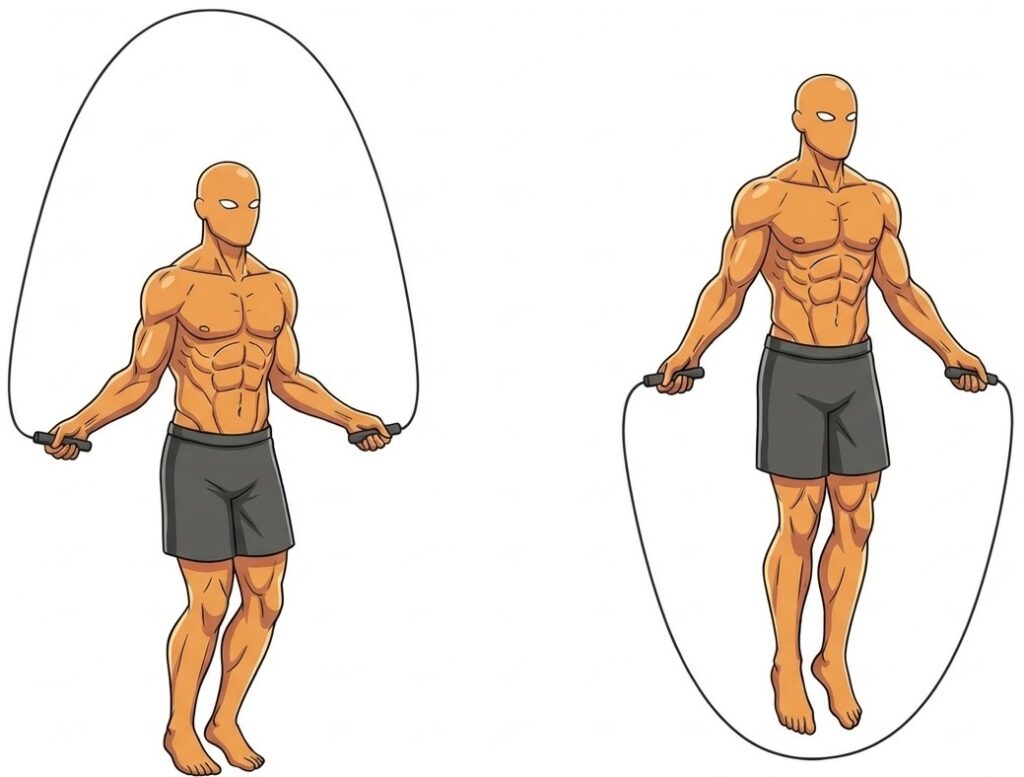
Jump Rope vs Running: The Time Advantage
One of the biggest reasons people skip workouts is simple: lack of time. Running, especially if you count warm‑up, changing clothes, getting outside, and coming back, can easily turn into a 45‑ to 60‑minute process. Jump rope changes that dynamic completely.
- A jump rope session can be set up and finished in a very short window because you only need a rope and a small space.
- Even a 5‑ to 10‑minute focused jump rope block can feel surprisingly intense, giving you a sense of a “complete workout” in far less time than a typical run.
Instead of thinking in terms of distance, with jump rope you think in terms of time blocks and intensity. When you keep the pace moderately high, the cardiovascular demand ramps up quickly. That is why many athletes use jumping rope as a conditioning tool when they need to get a lot of work done in a small time frame.
How Jump Rope Builds Cardio and Conditioning
Conditioning is not only about how long you can move; it is about how much work your heart, lungs, and muscles can handle while you move. Jump rope is especially good at building:
- Aerobic capacity: The ability to sustain activity using oxygen over time.
- Anaerobic tolerance: The ability to handle higher‑intensity bursts where your heart rate is elevated and your breathing is heavy.
- Footwork and rhythm: Useful for sports and daily movement, not just for fitness.
Because you can easily structure jump rope into intervals (for example, 30 seconds on, 30 seconds off), it naturally lends itself to high‑intensity interval training (HIIT) styles, which are known for improving conditioning with relatively short total session times.
A “small but intense” protocol might be:
- 5 rounds of 40 seconds jumping, 20 seconds rest.
- 10 rounds of 30 seconds jumping, 30 seconds rest.
- 8 rounds of 20 seconds hard, 40 seconds easy.
Even though the clock time is low, the total effort can be very high, which is why the training effect can rival or exceed a longer, steady run.
The Science: 10 Minutes Jump Rope = 30 Minutes Jogging Calories
Research shows that 10 minutes of jumping rope can burn roughly the same calories as 30 minutes of moderate jogging. This finding traces back to a 1968 NASA study and has been echoed in later analyses, including a 2013 Arizona State University review, which found similar cardiovascular benefits from short, intense rope skipping compared to longer steady-state running.
At moderate-to-high intensity, jumping rope torches 10-15 calories per minute—often outpacing jogging’s 8-10 calories per minute for a 155-pound person—making it dramatically more time-efficient while engaging your full body.
Joint Impact and Technique Considerations
People often worry that jumping is bad for the joints. In practice, with good technique, jump rope can be more joint‑friendly than it looks.
Key technique points:
- Land softly on the balls of your feet, not with a heavy heel strike.
- Keep your jumps low, just high enough to clear the rope.
- Maintain a slight bend in the knees and avoid locking your legs.
- Let your wrists, not your shoulders, do most of the rope turning.
Because the movements are small and controlled, the impact can be manageable for many people. For those coming from running, where each stride involves more force, jumping rope with good form can feel surprisingly smooth. That said, anyone with joint or tendon issues should always progress gradually and adjust volume to tolerance.
Saving Time While Burning Energy
From a practical standpoint, the main benefit of a short, intense jump rope routine is efficiency:
- Less total time per session.
- Less preparation and transition time.
- High cardiovascular load in a compact window.
This makes jump rope an excellent option for:
- Busy professionals with tight schedules.
- Parents who need quick workouts at home.
- Students who want effective training between study blocks.
- People who dislike long, slow runs but still want strong cardio.
Even adding a simple 5‑ to 10‑minute routine at the start or end of your strength workouts can significantly raise your weekly energy expenditure and conditioning.
Who Should Be Careful With Jump Rope?
While jump rope is simple and accessible, it is still an impact activity. Some people should progress more cautiously or consult a professional before jumping into it:
- Individuals with current or recent lower‑limb injuries (knees, ankles, hips, feet).
- People with very high body weight who have not been active for a long time.
- Anyone with cardiovascular or medical conditions requiring exercise supervision.
For those groups, starting with shorter intervals, lower frequency, and possibly alternate low‑impact cardio options before building up to regular jump rope sessions may be more appropriate.