Ever stared at the barbell loaded with two plates per side (225 lbs) and wondered why it feels impossible? You’re not alone. Poor bench press technique turns a powerful compound lift into a shoulder-shredding struggle. In this guide, we’ll break down the five most common bench press mistakes, explain the biomechanics behind them, and give you actionable cues to correct them.
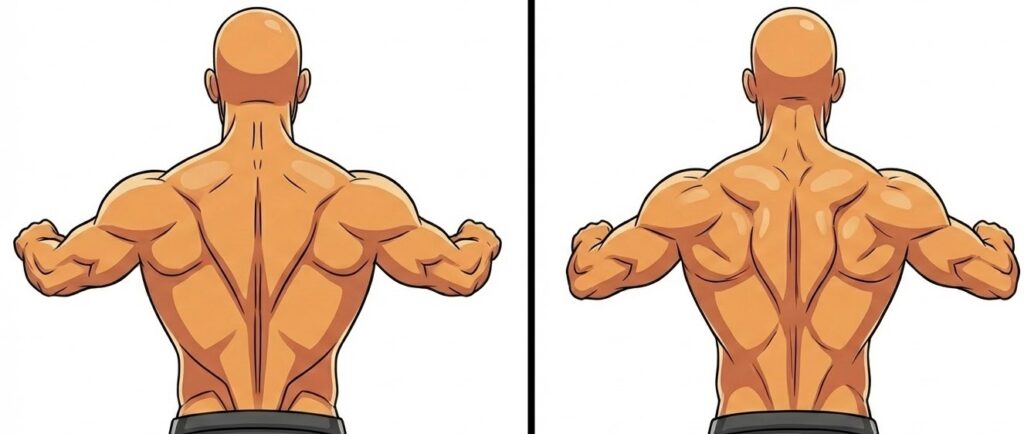
Mistake #1: Failing to Retract Your Scapulae (Shoulder Blades)
The Problem: When your shoulder blades lift off the bench during the press, you lose your stable base. This turns your chest into a wobbly platform, forcing smaller muscles like your front delts to compensate. Result? The bar feels twice as heavy, reps grind to a halt, and shoulder strain skyrockets.
Why It Happens (Biomechanics): Without retraction, your scapulae protract forward under load. This elongates your pecs and reduces force transfer from your lats and traps – key stabilizers in the bench press.
The Fix – Scapula Retraction Cue:
- Lie on the bench before unracking.
- Actively pull your shoulder blades back and down, as if pinching a pencil or coin between them.
- “Break the bar” by externally rotating your hands – this reinforces the retraction.
- Maintain this “packed” position throughout the set. Your shoulders should feel glued to the bench.
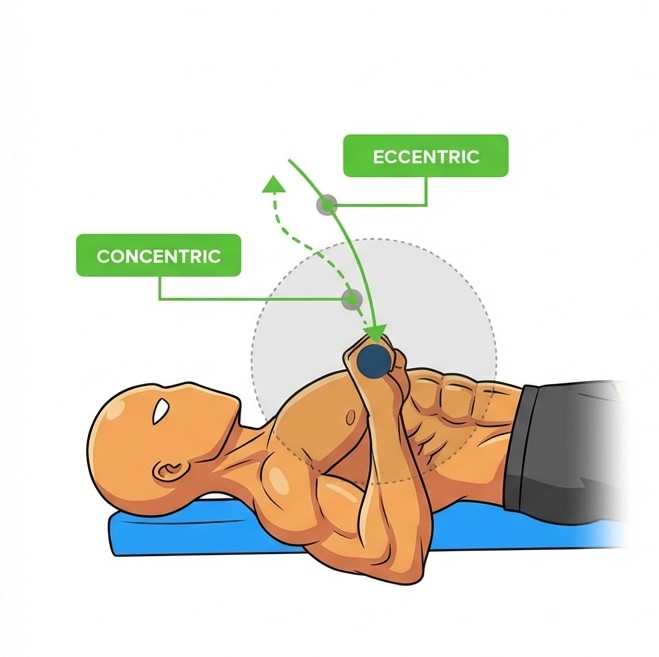
Mistake #2: Pressing in a Straight Line (Ignoring the J-Curve Bar Path)
The Problem: A straight up-and-down bar path creates a long “moment arm” from your shoulder joint to the bar. Your front delts do all the work, fatiguing early and limiting your chest and triceps recruitment.
The Fix – Optimal Bar Path:
- Start: Bar directly above your shoulders (higher than you think).
- Descent: Lower to your lower chest/upper abs in a slight arc – aim for the “J” curve.
- Ascent: Press up and back toward your shoulders, then straight up once past your shoulders.
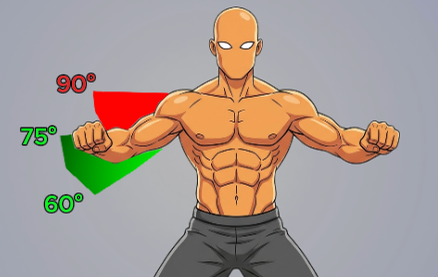
Mistake #3: Flaring Elbows to 90 Degrees**
The Problem: Elbows at a 90-degree flare (parallel to your torso) hammers your shoulders while underusing your triceps and chest. It’s a recipe for impingement and stalled progress.
Why It Happens: It feels “natural” for width, but it maximizes shoulder abduction under heavy load.
The Fix – Tuck Your Elbows (60-75 Degrees):
- From a bird’s-eye view, your elbows should form a 75-60 degree angle with your torso.
- Tuck them slightly on the descent
- This boosts chest activation (per EMG studies) and triceps drive.
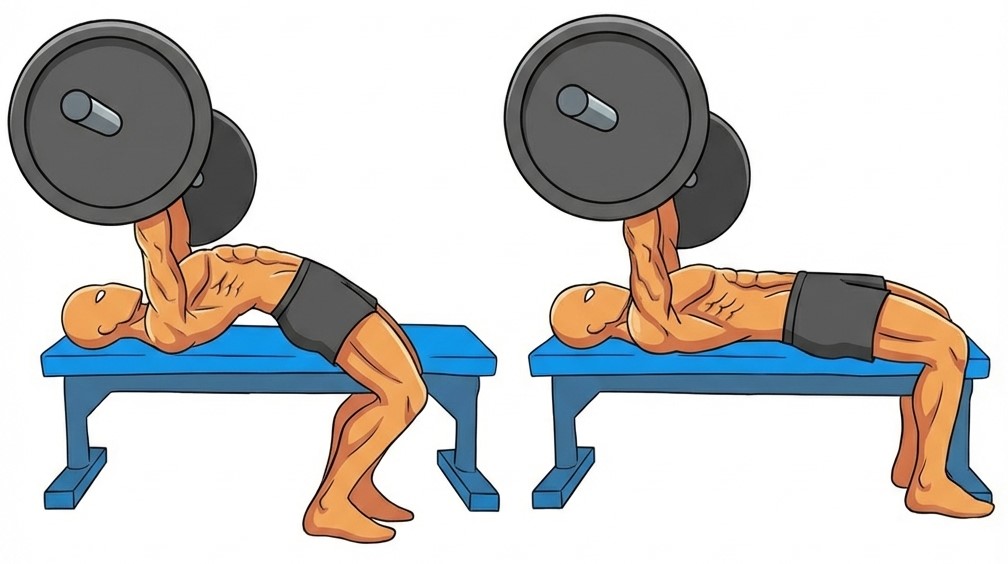
Mistake #4: Benching Flat with Zero Arch
The Problem: No arch = longer bar travel distance. Your chest sits low, increasing the range of motion by inches and sapping power.
Why It Happens: Fear of “cheating,” but a proper arch is physics – it shortens the path and protects your lower back.
The Fix – Build a Safe, Effective Arch:
- Plant feet flat, knees at 90 degrees.
- Drive hips up slightly to create a “bridge” – upper back and glutes touch the bench.
- Slide a fist under your lower back for space; chest should rise high.
- Keep butt down – no bridging up like a hip thrust.
Mistake #5: Passive Legs (No Leg Drive)
The Problem: Legs dangling or sliding forward wastes full-body tension. You miss out on triple extension power from glutes, quads, and hammies.
Why It Happens: Feet too close or focusing only on arms – bench is a whole-body press.
The Fix – Explosive Leg Drive:
- Feet shoulder-width, shins vertical.
- On the press, drive heels into the ground and push backward (like sled pushes).
- Hips stay planted; feel the force transfer through your body.
- Cue: “Screw your feet into the floor” for torque.